Blog · 26 September 2026 · 5 min read
Cam belt change: why it's one of the most important jobs on your car
A cam belt costs a few hundred pounds to replace. A snapped cam belt can cost you an engine. Here's everything you need to know about cam belt changes — what the belt does, when to change it, and what it should cost.
What does a cam belt do?
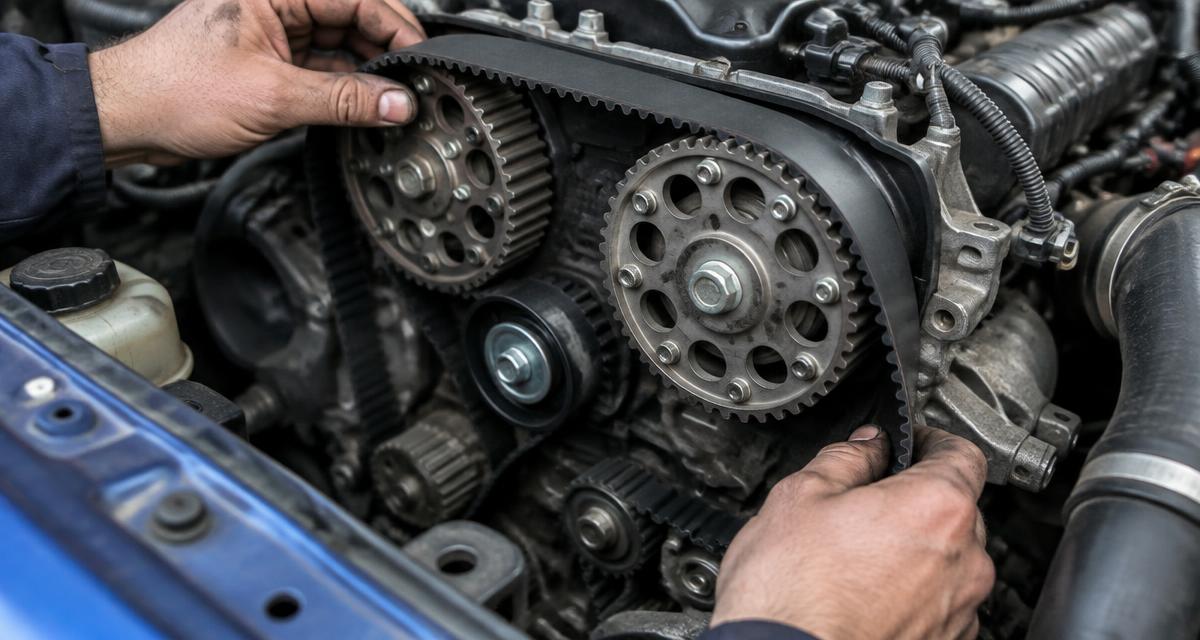
The cam belt (also called a timing belt) is a rubber belt with teeth that keeps the top and bottom of your engine turning in perfect time. It links the crankshaft to the camshaft, so the engine's valves open and close at exactly the right moment as the pistons move up and down.
If that timing slips — or the belt snaps — the valves and pistons can collide. On most modern engines (called "interference" engines) that means bent valves, damaged pistons and, in the worst cases, a written-off engine.
Why is changing it so important?
Cam belts are made of rubber, and rubber perishes. Heat, cold, oil contamination and simple age all weaken the belt over time. The problem is that a cam belt almost never gives a warning before it fails — no noise, no dashboard light, no gradual loss of performance. One moment it's fine, the next it's snapped.
That's why manufacturers give strict change intervals. Replacing the belt on schedule is planned, affordable maintenance. Replacing an engine after a snapped belt is neither. A cam belt change is genuinely the cheapest insurance your car can get.
When should a cam belt be changed?
It depends on the make and model, but most manufacturers recommend a cam belt change every 4–10 years or 40,000–100,000 miles — whichever comes first. Age matters as much as mileage: a low-mileage car that's ten years old still needs its belt done, because the rubber degrades whether the car is driven or not.
If you've just bought a used car and there's no proof of a cam belt change in the service history, treat it as overdue. If you're not sure about your car's interval, send us your registration number and we'll tell you.
What are the signs of a failing cam belt?
Honestly? Usually none — which is exactly why waiting for symptoms is a gamble. Occasionally you might notice a ticking noise from the engine, rough running, or visible cracks and fraying if the belt is inspected. But most belts that snap looked fine the day before. The only reliable approach is to change it on time.
Should the water pump be changed at the same time?
On many engines the water pump is driven by the cam belt. If the pump seizes later, it can take the new belt with it — and you'd pay for all the same labour again to get back in there. For that reason it's often sensible to replace the water pump (and the belt tensioners) at the same time. We'll always advise you on this before any work starts.
How much does a cam belt change cost in Derby?
At Derby Cam Belts the price is simple: fitting from £300 plus the cost of the cam belt kit for your engine. Because we're a home-run business, we don't carry the rent, rates and staff costs of a high-street garage — and we pass those savings straight on to you.
Text us your registration number and say whether you want fitting only (you supply the kit) or supply and fit (we source the kit). We'll come straight back with an exact quote — from £300 fitting, nothing else to pay. No obligation, no call-out charge.
The bottom line
A cam belt change is routine maintenance with an outsized payoff: a few hundred pounds now protects you from a repair bill in the thousands. Check your service history, know your interval, and if in doubt, get a quote — it costs nothing to ask.
Need a cam belt change in Derby?
Fitting from £300 plus the cost of your cam belt kit. Text your reg for an exact quote — fitting only or supply and fit.